Gladstone Area Water Board Logo
Home ButtonBackground ButtonPlanning ButtonWater Quality ButtonCommercial ButtonRecreation and Hatchery ButtonEducation  ButtonContact Us ButtonCorporate Button
     
  The Water Cycle
  Water facts
  FAQ's
  FAQs


Where does the water in Lake Awoonga come from?

Run-off water from the nearby hills and mountains flows down into the Boyne River which eventually feeds into Lake Awoonga. The catchment area contributing to the lake is 2,240 square kilometers and is surrounded by the Boyne, Dawes and Many Peaks Ranges.

What area does the catchment service?

The Gladstone Area Water Board (GAWB) provides water to Gladstone, Calliope, Boyne Island, Tannum Sands, Benaraby and Mt Larcom.  GAWB also supplies water to CS Energy - Callide Power Station at Biloela and various industries in the region.

What is the highest level the waters in Lake Awoonga have reached?

GAWB had raised the dam to 40m above sea level in 2002 and the drought that had commenced in 1996/97 eventually broke in February 2003 with 600mm of rain falling mainly over four days from a rain depression resulting from cyclone Beni. This raised the water level to 34.96m above sea level which was 62.31% of capacity. Further rainfall and inflows to Lake Awoonga raised the water to its highest level on 4 March 2004. The water levels in the lake reached 36.94m above sea level which was 75.63% of capacity.

What is the lowest level Lake Awoonga has reached?

After the dam was raised to 40m in 2002, the region was still in the grips of a severe drought.  In April 2002 GAWB implemented the Drought Management Plan which required restrictions on water consumption. Before rain from Cyclone Beni relieved the drought levels in February 2003, Lake Awoonga reached a level of 20.84m above sea level which was 7.44% of capacity or 57,803 megalitres (a megalitre is one million litres).


How much water is consumed in the Gladstone region?
 

Information on total water provided by GAWB is contained in the Annual Report on our background - publications page.


For specific information on water supplied to households, you will need to contact your local council.

Historically, how has water consumption changed in the Gladstone region?

Since 1978, consumption of water in Gladstone has more than trebled. The increase in demand for water has come about because more industries have developed in the region, and because of the resulting increase in workforce/population.


How is water supplied to consumers?


The Awoonga Pump Station pumps water from Lake Awoonga at a rate of up to 3,000 litres per second. The water is carried to Gladstone through a series of pipelines, ranging in diameter from 700mm to 1440mm.


There are more than 200km of pipelines that carry water to various destinations in the region.  This includes 147km of pipelines to carry raw or untreated water to customers and the water treatment plants.  There is an additional 58km of pipelines that carry treated water to Gladstone City Council, Calliope Shire Council and other industrial customers. 

 What are the storage facilities in the Gladstone region?

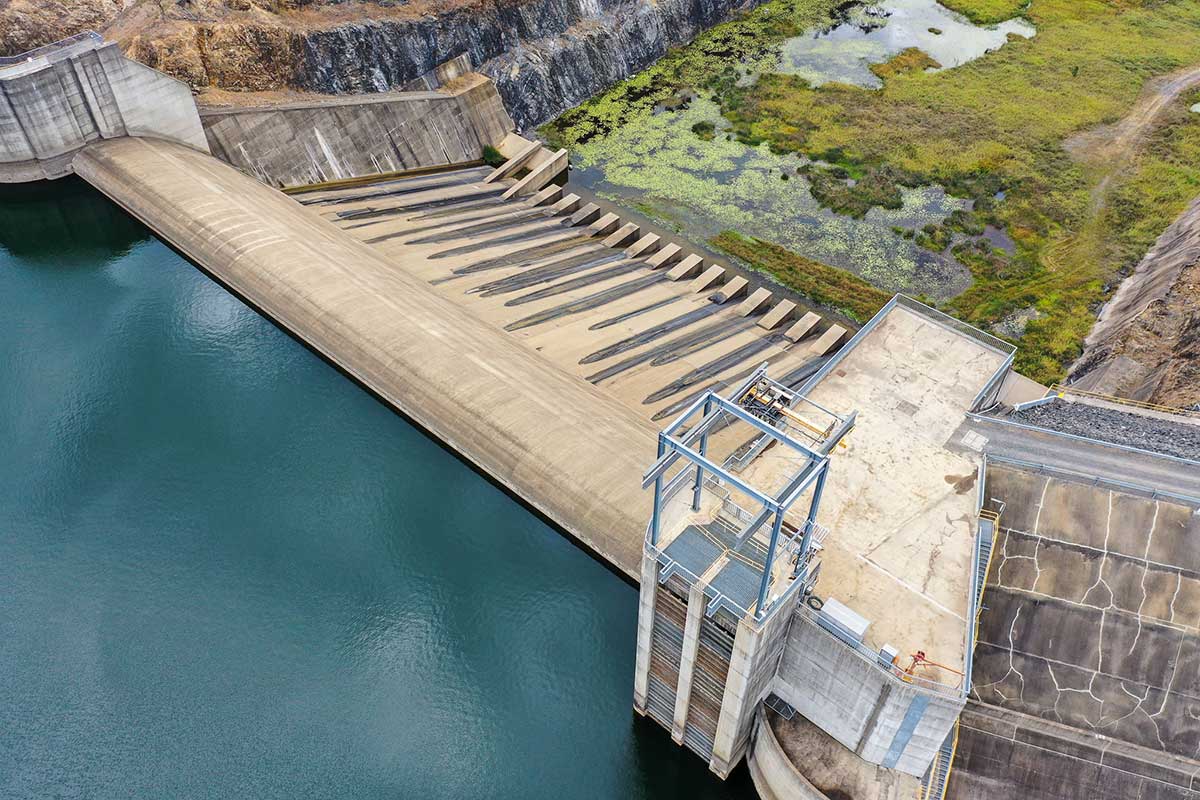
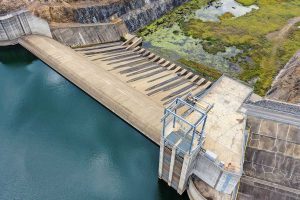
Awoonga Dam is the only permanent storage for water in the Gladstone region.  Awoonga dam is a 40m wall (above sea level) which was erected in two stages, to hold back water in the Boyne River.
 

The surface area of the lake at its full capacity of 40m is 6,750ha.  It has a capacity of 777,000 megalitres. There are various reservoirs around the region which hold water on a temporary basis to balance pumping loads across the day. 

GAWB owns two reservoirs which hold a total of 116 megalitres of raw water (1 x 50,000 megalitres and 1 x 66,000 megalitres.)  

What is a pump station?


A pump station is a building that holds the pumps that pushes the water through the pipelines.

 What is a water treatment plant?

A water treatment plant is a facility that cleans and disinfects water and there are two water treatment plants in the Gladstone region.  Water taken straight from Awoonga dam is not suitable to drink.  It may contain water creatures, insects, algae,  leaves and other matter, therefore the water has to treated to make it safe to drink.


       ABN 88 409 667 181